
How to Build a Digital Identity That Survives Every Algorithm Change
The creators who never get rocked by algorithm updates share one common trait. They spent time early on building audience relationships that do not depend on any single platform’s distribution decisions. They used social platforms the way a business uses advertising — to bring people in, not to house everything. The content is on the platform. The relationship is not.
Because every major platform has changed its algorithm in ways that materially hurt creator reach at least once in the last five years, the pattern is not an anomaly. It is the normal operating environment. Instagram shifted from chronological to algorithmic. YouTube adjusted its recommendation logic. Twitter restructured its feed. Facebook collapsed organic reach for business pages by over 80 percent in a single year. Every one of those shifts separated creators who had built owned infrastructure from those who had not.
As a result, this guide covers the framework that makes a digital identity genuinely algorithm-proof over time — not by avoiding platforms, but by using them in a way that moves value out of them and into infrastructure you actually own before the next shift arrives.
The Hub-and-Spoke Model for Your Online Presence
The framework that survives every algorithm change is structurally simple. You have a hub — infrastructure you own — and spokes, which are the platforms where your content lives. The hub is your email list, your link page at a consistent URL, your podcast RSS feed, your community platform if you run one. These are the assets you control and that cannot be taken from you by a policy update or a recommendation engine shift.
The spokes are Instagram, Threads, TikTok, YouTube, LinkedIn. These are the discovery channels. Their job is to find new people and route them toward your hub. The spokes create reach. The hub creates relationships. Because reach without a relationship is just attention that disappears when the algorithm shifts, the spoke does half the work. The hub is what determines whether that work compounds into something durable.
Every Piece of Content Needs a Path to the Hub
The tactical implication of the hub-and-spoke model is that every piece of content you create should have a clear path that moves a new viewer from the spoke — the platform where they discovered you — to the hub — the owned infrastructure where the real relationship begins. That path almost always runs through your bio page. Because the bio page is the one place every platform allows you to send people outside the platform, it is the transition point between rented attention and owned relationship.
Therefore the bio page is not a directory of your social links. It is a conversion tool. Its job is to take the curiosity a piece of content generated and convert it into an owned relationship — an email subscriber, a community member, a podcast listener — before the platform’s algorithm decides whether to show them your next post.
The Role of Owned Short Links in Your Content Strategy
Every time you post content on a social platform and include a link, that link is either tracked or it is not. If it is a tracked short link you own, you get data. You know which platforms drive traffic to your bio page. You know which content topics generate clicks. You know which posts produced owned audience conversions and which ones generated views but nothing durable.
If you are using generic URLs or third-party link shorteners you do not own, that data belongs to someone else. Over a year of content creation, the difference between owning that data and not owning it is the difference between a content strategy based on evidence and one based on instinct. As a result, replacing every external link in your content with a tracked short link you own is not a minor optimization — it is the foundation of an evidence-based content strategy.
Algorithm-Proof Framework Checklist
- Define your hub clearly — identify the specific owned infrastructure (email list, bio page, community) that your social content should be routing people toward.
- Audit every piece of content you are currently creating and confirm each one has a clear path to your hub — a bio link mention, a tracked short link in the description, or a specific CTA.
- Replace every third-party or untracked link in your content with a tracked short link you own so your data belongs to you.
- Check your bio page monthly and confirm it is actively converting profile visitors into owned audience relationships — email subscribers, not just link clicks.
- Set a quarterly review date to measure the growth of your owned audience relative to your social following and confirm the ratio is moving in the right direction.
Visual: The Hub-and-Spoke Model for Digital Identity
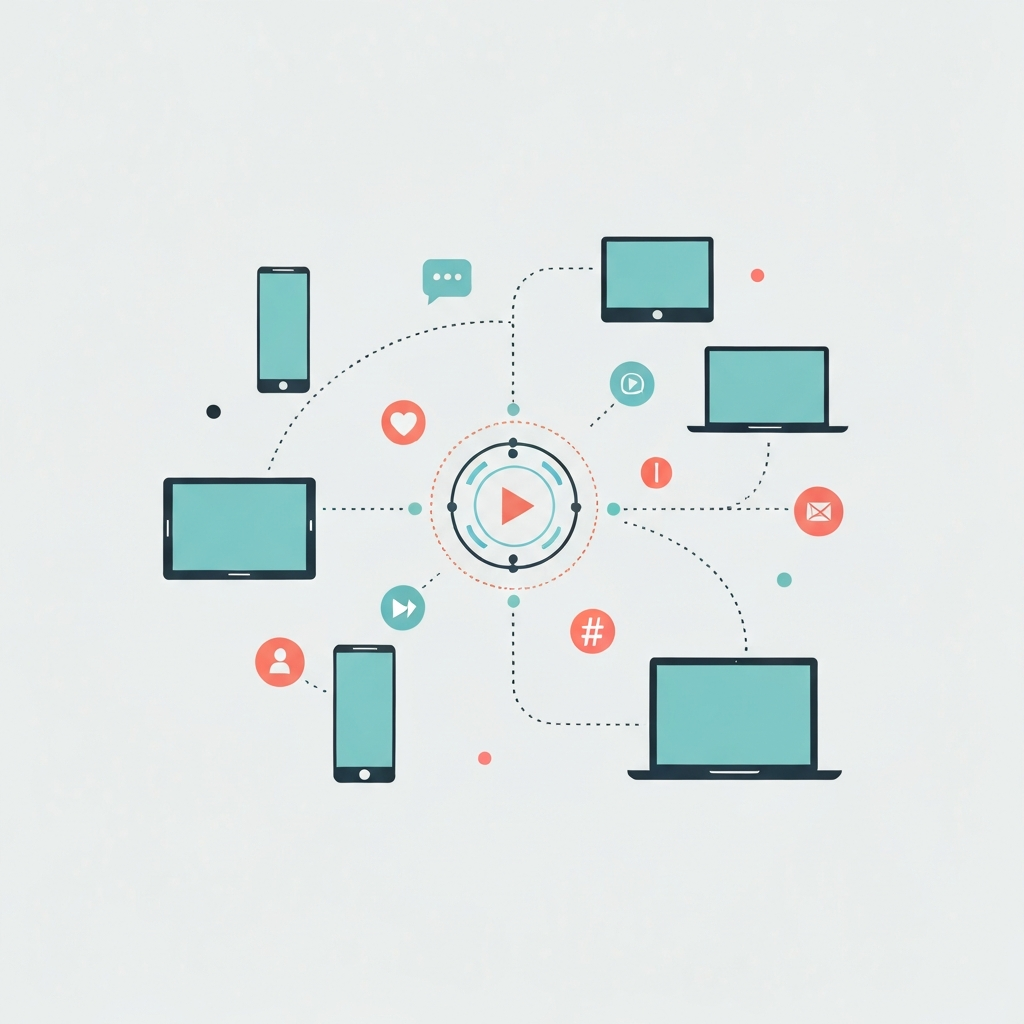
This diagram maps the hub-and-spoke model onto a creator’s digital presence. Meanwhile it illustrates why platform algorithm changes affect only the spoke — the reach and discovery layer — without disrupting the hub, where the owned relationships live. The diagram also shows why the bio page sits at the transition point between every spoke and the hub, making it the single most important conversion tool in the entire system.
Tools for Building an Algorithm-Proof Digital Identity
The hub-and-spoke model requires two categories of tools: the hub infrastructure that stores your owned audience relationships, and the tracking layer that connects spoke activity to hub growth. Therefore choosing the right tools for both categories is what determines whether your content investment compounds into owned audience relationships or evaporates with every algorithm shift.
Find@ — Bio Page and Short Link Tracking in One Place
Find@ sits at the transition point between your spokes and your hub — the bio page that converts platform visitors into owned audience relationships, and the tracked short links that tell you which content is driving that conversion. Because Find@ combines bio page management, short link analytics, and QR code tracking in a single dashboard, the data that connects your spoke activity to your hub growth lives in one place rather than scattered across tools that do not communicate with each other. Build your hub transition point at Find@ Bio Pages.
Email as the Hub Core
The email list is the most durable component of any creator’s hub. Because the relationship between you and an email subscriber runs directly — no algorithm, no platform policy, no reach reduction between you — it is the owned asset that is most resistant to platform disruption. As a result, every bio page optimization should have email capture as its primary conversion goal, with other owned channel offers as supporting options. The metric that matters most is not bio page total clicks — it is how many of those clicks result in an email subscriber who is now in your hub.
Content Analytics as Strategic Intelligence
Short link analytics on every piece of content you publish transform content performance from a guess into a measurement. Which platform sends the most engaged traffic to your bio page? Which content topic generates the most email signups? Which post format converts platform attention into owned audience relationships at the highest rate? Meanwhile without tracked short links, you cannot answer any of these questions with data. With them, every month of content production builds a strategic intelligence layer that makes your next month more effective than the last.
Hub Building Tool Checklist
- Set up your bio page on Find@ as the canonical transition point between all your social platforms and your owned infrastructure.
- Add a tracked Find@ short link to every piece of content that includes an external URL — newsletter, posts with links in bio, YouTube descriptions, podcast show notes.
- Connect your email capture offer directly to your bio page’s primary link and measure weekly how many profile visitors become email subscribers.
- After thirty days of tracked short link data, identify which platform and which content type drives the most hub conversions — email signups, not just clicks.
- Use that data to reallocate your content creation time toward the formats and platforms that are actually building your owned audience, not just your view count.
Algorithm Vulnerability by Infrastructure Type
| Infrastructure Type | Algorithm Dependent | What Changes When Algorithm Shifts | Recovery Path |
|---|---|---|---|
| Social following only | Fully | Reach drops immediately — all content distribution affected | Slow and difficult — requires rebuilding reach from scratch on new algorithm terms |
| Social + bio page (no email capture) | Mostly | New follower flow slows — existing bio page URL unaffected | Moderate — bio page traffic continues but new audience growth slows |
| Social + bio page + email list | Partially | Discovery slows — existing email relationships completely unaffected | Fast — email list maintains direct audience access while discovery rebuilds |
| Social + bio page + email + tracked short links | Minimally | Discovery slows — data shows exactly which content still works on new algorithm | Fastest — data guides rapid pivot to content formats the new algorithm favors |
How to read this table for your current situation
- If you are in row one — social following only — every algorithm change is a potential catastrophe. The priority is adding rows two, three, and four as quickly as possible.
- If you are in row two, the bio page is working but not compounding. Add an email capture offer to your primary bio page link this week and measure the conversion rate for thirty days.
- Meanwhile if you are in row three, add tracked short links to your content immediately — the data layer is what transforms a resilient presence into an actively optimizable one.
- Row four is the target state. It does not make algorithm changes irrelevant — it makes them navigable, because you have the data to adapt and the owned relationships to sustain the business while you do.
CONCLUSION
Algorithm changes are not problems to be solved — they are conditions to be prepared for. Because every major platform has demonstrated that it will change its distribution logic in ways that hurt creator reach when it serves the platform’s interests to do so, the only reliable response is to build infrastructure that is not dependent on any platform’s current distribution decisions.
The hub-and-spoke model does not eliminate the impact of algorithm changes. It determines whether that impact affects only your discovery — which is temporary and recoverable — or your entire audience relationship, which is not. Therefore building the hub before the next algorithm shift is not a precaution. It is the strategic foundation that makes everything you create on social platforms worth creating.
Find@ gives you the bio page, the tracked short links, and the analytics to build and measure your hub from a single platform — so every piece of content you publish on any spoke has a clear, tracked path to owned audience relationships that no algorithm can touch. Start building your hub at find.at before the next shift makes it urgent.
Frequently Asked Questions (FAQs)
What does “algorithm-proof” actually mean in practice?
It means that when an algorithm changes, your business is affected at the discovery layer — fewer new people find you — but not at the relationship layer, where your existing audience still has direct, unmediated access to your content. Because email subscribers, community members, and direct contacts exist outside any platform’s algorithm, they cannot be algorithmically deprioritized. As a result, algorithm-proof does not mean invisible to algorithm changes — it means that the impact of those changes is limited to slowing new audience growth rather than destroying existing audience relationships.
How long does it take to build a meaningful hub?
The hub starts working from day one — even a single email subscriber represents a relationship that exists outside any algorithm. Because hub building is cumulative rather than threshold-dependent, there is no minimum size at which it becomes meaningful. Each additional email subscriber, each additional tracked short link, each additional month of content analytics data adds to the value of the system. Therefore starting immediately with whatever audience you currently have is more valuable than waiting until your social following is large enough to justify the effort.
What is the most common mistake creators make with the hub-and-spoke model?
Treating the bio page as a spoke rather than as the transition point. A bio page that links to your social platforms — Instagram, TikTok, YouTube — is sending platform visitors back onto platforms. It is a circular system that keeps the audience in the rented layer rather than moving them to the owned one. Therefore every link on your bio page should go to an owned destination — an email capture page, a community, a direct offer — not back to another social platform. The spokes already route people to your bio page. The bio page’s job is to route them off the platforms entirely.
Do I need to be on multiple platforms for the hub-and-spoke model to work?
No. The model works with a single spoke — even one active platform feeding one strong hub produces a more durable business than multiple platforms with no hub at all. Because the goal is to convert platform attention into owned relationships, the number of spokes matters less than how effectively each one routes traffic to the hub. Meanwhile adding more spokes without first optimizing the hub-to-spoke conversion rate compounds reach without compounding owned audience growth — which is the core mistake the model is designed to prevent.
How does Find@ support the hub-and-spoke model specifically?
Find@ acts as the transition point between your spokes and your hub — the bio page that converts platform visitors into owned audience relationships, and the tracked short links that tell you which content is driving that conversion. Because bio page analytics and short link analytics share the same dashboard, you can see the full path from a platform post to a bio page visit to an email signup — the complete spoke-to-hub journey — in one view. As a result, every content decision you make is informed by data about what is actually moving people from your spokes into your hub. Start at find.at.


