
Why Building Your Entire Brand on Social Platforms Is a Gamble Most Creators Are Losing
The case for building on social platforms is obvious. That is where the people are. Platforms like Instagram, Threads, TikTok, and YouTube have hundreds of millions of daily active users. They have built-in discovery, built-in audiences, and built-in content tools that make distribution frictionless. Starting on these platforms is smart. Staying exclusively on them is a gamble that has already played out badly for creators who did not see the pattern until it was too late.
Because this risk is not hypothetical — it has happened repeatedly, to real creators, with real consequences — the question is not whether it could happen to you. It is whether you will have built enough owned infrastructure before the next shift arrives to absorb the impact without losing what you built. The creators who absorbed every platform upheaval of the last decade had one thing in common: they used social platforms to bring people in, and then moved those relationships onto infrastructure they controlled.
As a result, this guide covers the pattern that repeats across every major platform shift, what the difference between a borrowed audience and an owned one actually means in practice, and the specific steps that move a social-only creator toward a sustainable digital presence that no algorithm change can destroy overnight.
The Algorithm Reset Problem
In 2018, Facebook organic reach for business pages collapsed from around ten percent of followers to under two percent almost overnight. Brands that had spent years building Facebook audiences of fifty thousand, one hundred thousand, or one million people suddenly found that their posts were reaching fewer than two thousand of them. The audience was still there. The relationship was not — because it had always been mediated by the platform, not owned by the creator.
The same pattern played out on Twitter during the ownership transition, on Instagram when it shifted from chronological to algorithmic feeds, and on YouTube every time it adjusted its recommendation logic. Every one of those shifts was a signal. Most creators absorbed the hit and moved on. Very few asked the harder question: what would happen if the next shift was final? Because the answer to that question determines whether you are building a business or building someone else’s content library.
Platform Risk Is Not Just About Losing Followers
Platform risk is the reality that every relationship you have built on a platform you do not own can be interrupted at any time, by a decision you had no part in and cannot appeal. It is not just about losing reach. It is about the fact that the connection between you and your audience runs through infrastructure that belongs to a company with its own priorities — priorities that may or may not include protecting your ability to reach the people who followed you.
Account suspensions — including appeals processes — can take weeks to resolve, during which your entire social presence is offline. Link restrictions can limit which URLs you are allowed to share in posts. Monetization eligibility can be changed without notice. Meanwhile none of these decisions require your consent or advance warning. Therefore the question is not whether you trust the platforms — it is whether you have built enough outside them to survive if the relationship changes.
The Audience You Own Versus the Audience You Borrow
An email subscriber is someone who gave you their address and explicit permission to reach them directly. No algorithm decides whether that email gets delivered. No platform decides whether you can send it. No policy change removes it from your list unless the subscriber chooses to leave. As a result, an email list is the most reliable asset a creator can build — not because email is exciting, but because the relationship it represents runs directly between you and the subscriber with no intermediary that can be changed, acquired, or shut down.
A social follower is someone who pressed a button that tells an algorithm to maybe show them your content sometimes. The connection is real in terms of expressed interest. The ownership of it is not yours. Therefore every follower who becomes an email subscriber is a rented relationship that has been converted into an owned one — and that conversion is worth more than any follower count milestone because it is durable in a way that follower counts are not.
Platform Risk Checklist
- Identify which platforms currently represent more than fifty percent of your total audience reach — those are your highest-risk single points of failure.
- Check whether you have a way to contact your entire audience independently of any social platform — if not, that is the gap to close first.
- Add an email capture offer to your bio page before your next piece of content goes live — even a basic free resource converts profile visitors into owned audience relationships.
- Review your content strategy to confirm that every social post creates an opportunity to move interested followers onto owned infrastructure.
- Set a quarterly reminder to check that your owned channels — email list, bio page, custom domain — are functioning and growing relative to your social reach.
Visual: Borrowed Audience vs Owned Audience
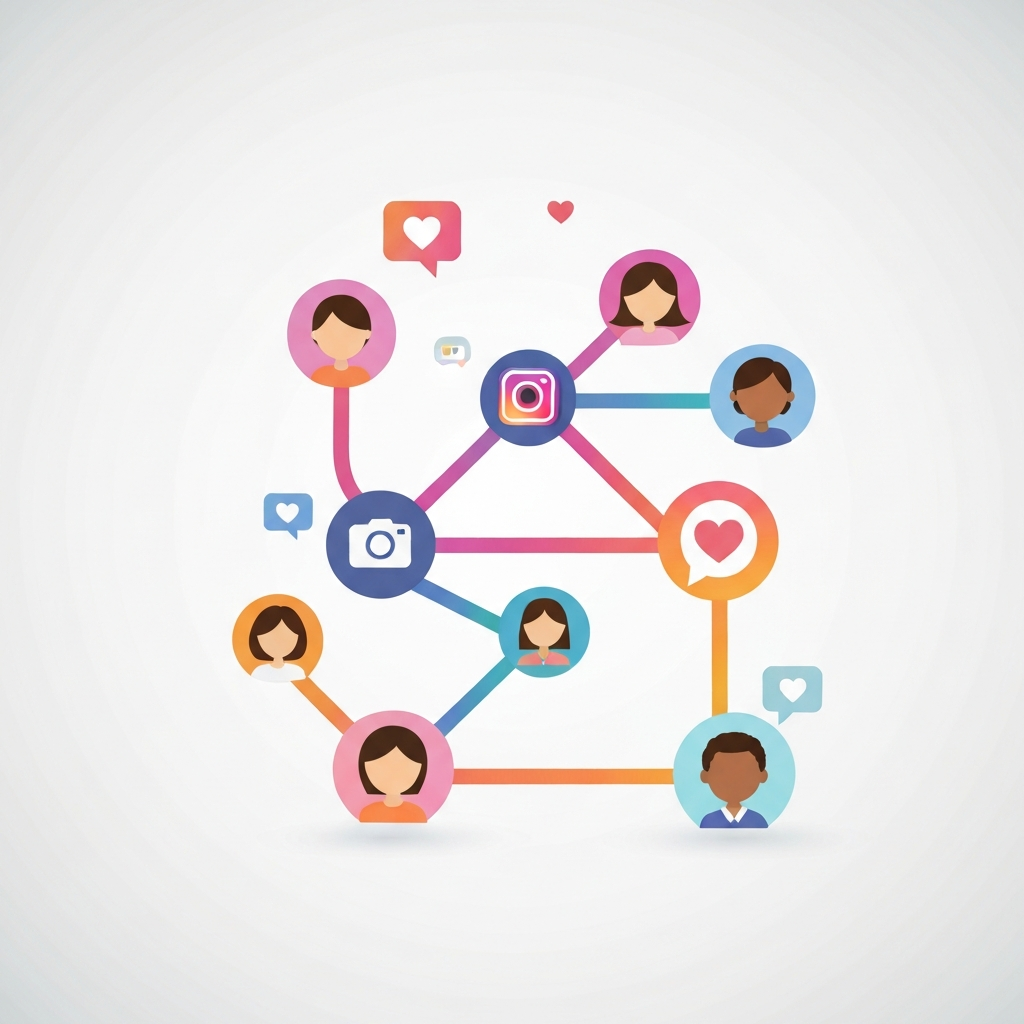
This diagram maps the structural difference between a borrowed audience and an owned one. Meanwhile it illustrates how the same number of followers can represent completely different levels of business durability depending on whether the relationship runs through platform infrastructure or owned infrastructure — and why growing your email list in parallel with your social following is not a conservative strategy but the one with the highest long-term return.
What a Sustainable Digital Presence Actually Looks Like
The goal is not to abandon social platforms. Because social platforms are the most efficient discovery and distribution channels available to most creators, leaving them entirely would be counterproductive. The goal is to use them correctly — as reach channels that funnel interested audiences toward owned infrastructure — rather than as the foundation the entire business sits on.
The Bio Page as the Bridge
Your bio page is the transition point between rented and owned. It is the first destination a new follower reaches when they want to go deeper — and it is the place where the choice between keeping them as a rented follower or converting them to an owned relationship is made. Because every social profile allows one link in bio, that link is the highest-leverage real estate in a creator’s entire digital presence. Therefore what that link goes to determines how efficiently your content investment converts into durable audience relationships.
A bio page on Find@ that offers a free resource, a newsletter invite, or a community access link is converting curious followers into owned audience members at every profile visit. Because the page is live and updateable without changing the URL, every future piece of content you create sends traffic to a conversion point that is always current and always working. Start building your bridge at Find@ Bio Pages.
Short Links as Owned Analytics
Every link you share in content is either tracked or it is not. If you use a tracked short link you own, you get data about which content drives the most traffic to your owned destinations — which formats convert, which topics generate action, which platforms produce the most engaged visitors. As a result, the difference between using tracked short links and not using them is the difference between a content strategy built on evidence and one built on view counts and engagement metrics that measure attention but not intent.
Sustainable Presence Building Checklist
- Use social platforms for discovery and reach — not as the primary container for your audience relationship.
- Treat your bio page as the bridge from rented to owned and optimize it specifically for email capture and owned channel conversion.
- Use tracked short links in every piece of content so you can measure which posts actually drive owned audience growth, not just views.
- Set a monthly metric for owned audience growth — email subscribers, community members, or direct contacts — separate from social follower count.
- Review the ratio of rented to owned audience relationships quarterly and track whether it is improving over time.
Social Platforms vs Owned Infrastructure: What Each Does
| Function | Social Platforms | Owned Infrastructure |
|---|---|---|
| Audience discovery | High — built-in recommendation and feed systems | Low — requires separate SEO or referral traffic to build |
| Relationship durability | Low — mediated by algorithm; reach can be reduced overnight | High — email and owned channels are not algorithm-dependent |
| Data ownership | None — platform owns all follower and engagement data | Full — email list, bio page analytics, and link data belong to you |
| Platform dependency risk | High — policy changes, shutdowns, and algorithm shifts apply | None — owned infrastructure is not subject to third-party decisions |
| Monetization control | Limited — platform sets eligibility rules and can change them | Full — direct sales, subscriptions, and offers on your own terms |
| Best use in a creator business | Discovery and reach channel — bring new people in | Relationship and conversion layer — keep people and convert them |
The right way to think about both
- Social platforms and owned infrastructure are not competing choices — they are two layers of the same system that work together when structured correctly.
- Social platforms do the discovery work that owned infrastructure cannot do efficiently. Owned infrastructure does the retention and conversion work that social platforms are structurally incapable of doing reliably.
- Meanwhile the bio page is the single connection point between the two layers — the transition from the platform’s infrastructure to yours. Therefore optimizing it is not a minor task. It is the most important structural decision in a creator’s digital presence.
- For creators who have built almost everything on social platforms, the first owned infrastructure step is not rebuilding from scratch. It is adding one email capture offer to your bio page and measuring how many profile visitors become email subscribers over the next thirty days.
CONCLUSION
Building exclusively on social platforms is not a strategy failure — it is a starting point that has a logical next step. Because social platforms are where audiences are built and where content reaches new people, they are the right place to start. The problem is when they become the only place — when the entire audience relationship lives inside infrastructure that belongs to someone else and can be disrupted by decisions you have no input into.
Therefore the shift from a social-only presence to a sustainable digital presence is not about abandoning what is working. It is about adding the owned layer beneath it while the social layer is still generating traffic and attention. Every follower who becomes an email subscriber, every profile visitor who lands on a bio page with a conversion offer, every piece of content that includes a tracked short link — these are incremental steps that compound into a business that survives what a social-only creator cannot.
Find@ gives you the bio page, the tracked short links, and the analytics that turn your social traffic into owned audience relationships — one profile visit at a time. As a result, every piece of content you have already created continues to drive value toward infrastructure you actually own. Start building the owned layer at find.at.
Frequently Asked Questions (FAQs)
Does this mean I should stop posting on social media?
No. Social platforms are the most efficient discovery and distribution channels available to most creators — abandoning them would reduce reach without solving the underlying risk. The goal is to use them correctly: as reach channels that funnel interested followers toward owned infrastructure, not as the foundation the entire business sits on. Because social platforms and owned infrastructure serve different functions in a creator business, the right approach is to run both simultaneously rather than choosing between them.
What is the fastest first step toward building owned infrastructure?
Add one email capture offer to your bio page before your next piece of content goes live. A free resource, a newsletter invite, or a community access link gives profile visitors a reason to share their email address — converting a rented follower relationship into an owned one. Because this requires no development work and costs nothing to set up on a platform like Find@, it is a change that can be live within an hour and producing results with your next post. Therefore start here before any more complex infrastructure investment.
How many email subscribers do I need before it becomes a meaningful owned channel?
One hundred engaged email subscribers who open and click are worth more than ten thousand social followers who passively scroll past your content. Because email delivers your message directly to people who explicitly asked to receive it — with no algorithmic filtering — the conversion rate of email traffic to sales, downloads, or other actions is consistently higher than social traffic for most creators. As a result, even a small email list has disproportionate business value relative to its size. Start building from zero and measure engagement rate — not just list size — from the beginning.
I have been on one platform for years. Is it too late to start building owned infrastructure?
It is never too late, and an established social presence makes the transition faster — not slower. Because you already have an audience of people who have expressed interest in your content, every post you publish from this point forward can include a bio page link that converts that interest into an owned relationship. Meanwhile the data you have accumulated about what your audience responds to is exactly the information you need to choose which email capture offer or free resource will convert the most profile visitors. Start now and use your existing audience to accelerate the owned infrastructure build rather than starting from zero.
How does Find@ help convert social followers into owned audience relationships?
Find@ gives you a bio page that functions as the bridge between your social presence and your owned infrastructure — with per-link analytics that show how many profile visitors click your email capture offer versus your other links. Because the page is updateable without changing your bio URL, every future piece of content sends traffic to a conversion point that is always current. Meanwhile tracked short links in your content show which posts drive the most bio page traffic, so you know which content is actually building your owned audience. Start at find.at/bio-profiles.


