

Intent-Based Marketing: Capture Customer Signals and Convert Faster
Intent-based marketing turns visitor signals into timely outreach. It reads repeated visits, searches, and demo requests like a map. When you act fast, you meet buyers at their moment of need. Therefore you boost conversion and reduce wasted ad spend.
Picture a dashboard that lights when intent surges. It shows who watches demos and who downloads whitepapers. Because first-party signals power this insight, you stay privacy-safe and accurate. As a result you prioritize leads that are most likely to buy.
In this guide you will learn to build intent-driven funnels. You will use real-time analytics, scoring, and automation to act within 24-48 hours. Moreover we share quick wins like intent scoring and intent-specific landing pages. Get ready to turn signals into predictable revenue.
Whether you are a startup or a seasoned marketer, this playbook helps. However you must measure intent conversion rate and give strategies 90 days to mature. Then watch how smarter timing lowers customer acquisition cost. Let’s dive in and capture intent with confidence.
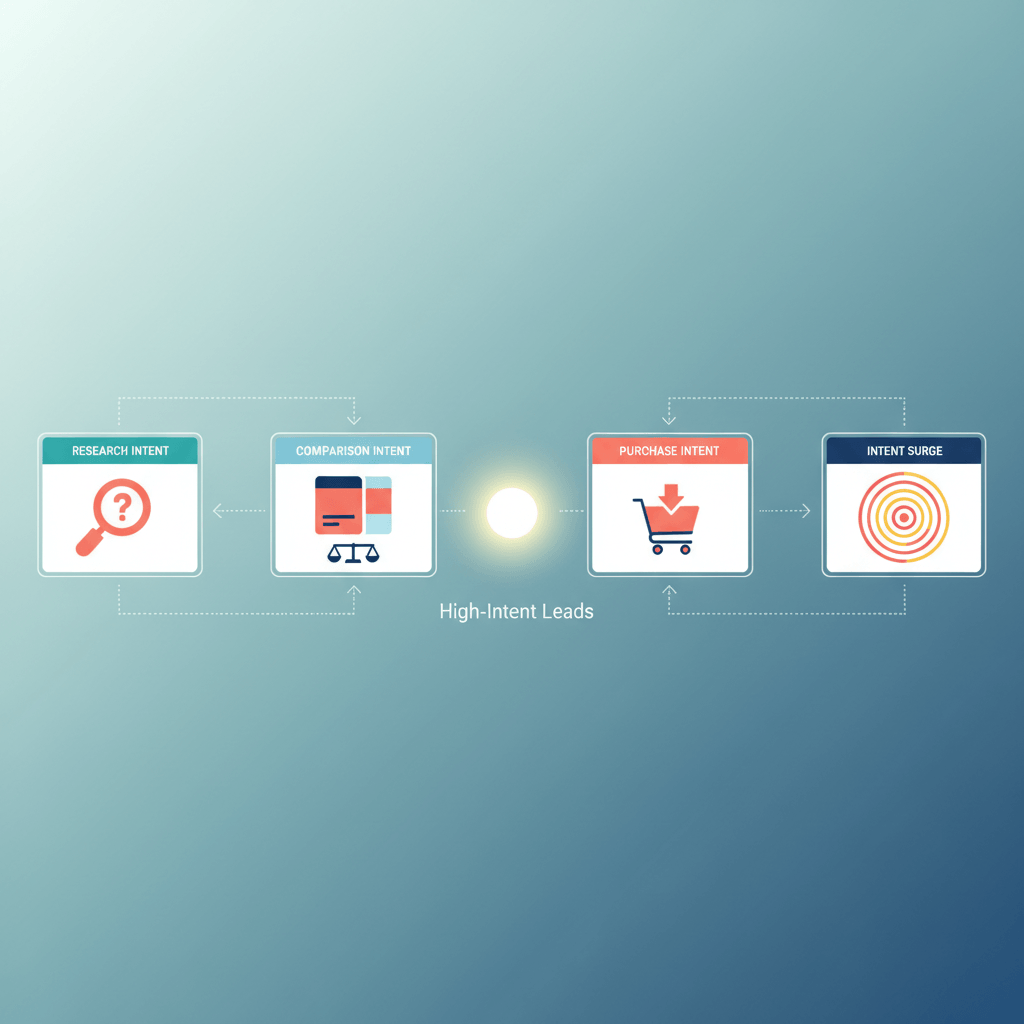
How intent-based marketing works
Intent-based marketing reads signals and helps you act at the right time. It uses behavior to predict purchase readiness. Therefore it replaces guesswork with timely, relevant outreach.
The idea in one line
- Spot real actions. Then prioritize the people who take them.
- Use first-party data and intent signals like page visits and demo requests.
- Act within 24 to 48 hours to increase conversion probability.
The psychological arc from insight to payoff
-
Insight
- A visitor returns or downloads content. Because of that you know they seek solutions.
- This moment reveals intent signals such as search keywords and repeated visits.
-
Interpretation
- Score those signals to separate casual browsers from buyers. As a result you focus on real opportunities.
- Use intent scoring that weights behavior and recency.
-
Engagement
- Deliver the right message at the right channel. For example, serve decision-stage content or a demo invite.
- Then route hot leads to sales or automation flows.
-
Reinforcement
- Follow up with personalized offers and decision-stage landing pages.
- This reduces friction and shortens time to conversion.
-
Payoff
- You see higher intent conversion rates and lower customer acquisition cost.
- Over 90 days patterns emerge and inform future campaigns.
Signals, tools, and privacy
- Common intent signals include repeated visits, gated downloads, webinar attendance, and chat engagement.
- Rely on first-party data and privacy-compliant practices under GDPR and CCPA.
- Tools such as Smart Short Links and Find@ Developer API help capture and act on signals.
Related keywords and tactics
- intent data, intent signals, first-party data, personalization, lead scoring.
- Quick wins include keyword-to-close tracking and intent-specific landing pages.
Intent-Based Marketing compared with other strategies
| Strategy | Key features | Benefits | Drawbacks | Best use cases |
|---|---|---|---|---|
| Intent-based marketing | Uses real-time intent signals like page visits and downloads. Focuses on first-party data and fast response. Scores leads by behavior and recency. | Prioritizes buyers who show readiness. Therefore it increases intent conversion rate. Reduces wasted ad spend. | Requires good data capture and fast workflows. As a result teams must act within 24 to 48 hours. | B2B SaaS and solution sales with clear decision-stage signals. Use when you can capture first-party data. |
| Traditional inbound marketing | Content, SEO, and lead magnets attract broad traffic. Nurtures leads slowly over time. Builds brand authority. | Generates sustainable organic traffic. However it converts over longer cycles. Lowers top-of-funnel costs. | Can be slow to produce sales. It rarely targets buyers who are ready now. | Brands building awareness and long-term funnel velocity. Good for content-led growth. |
| Outbound marketing | Uses ads, cold outreach, and sponsorships to push messages. Targets lists and segments directly. | Drives scalable reach quickly. Therefore teams can target specific personas. Good for quick awareness. | Often expensive and interruptive. As a result it lowers ROI for poorly targeted lists. | Product launches and demand generation where scale matters. Useful when you need rapid lead volume. |
| Behavioral marketing | Personalizes messaging based on past actions across channels. Relies on cookies and cross-site signals. | Delivers tailored experiences. It can boost engagement and repeat visits. | Privacy rules and third-party cookie loss limit accuracy. Therefore compliance is required. | E commerce and retargeting where browsing history predicts purchase intent. |
| Account-based marketing | Focuses on named high-value accounts. Aligns sales and marketing around specific targets. | Concentrates resources on high-value deals. As a result conversion rates can rise for target accounts. | Narrow scope and long sales cycles can raise costs. It may miss broad intent signals. | Enterprise deals and high ACV accounts that need bespoke outreach. |
Benefits of intent-based marketing
Intent-based marketing turns behavior into advantage. Because you watch real actions, you reduce guesswork. As a result you reach buyers when they are ready.
- Higher conversion efficiency
- You target users who show real interest. Therefore fewer touches lead to sales.
- Example: a prospect downloads a pricing guide and gets an invite to a live demo within 24 hours. The team closes faster.
- Better resource allocation
- You focus on high-probability leads, not everyone. So sales time and ad spend go farther.
- This reduces customer acquisition cost and improves ROI.
- More relevant personalization
- Messages match the buyer stage and context. Then engagement rates rise.
- For instance, serve competitor comparison content to users researching options.
- Privacy forward and first-party driven
Challenges of intent-based marketing
Intent-based marketing shines, but it has hurdles. However you can manage them with the right tools.
- Data capture and quality
- You need accurate, timely first-party signals. Otherwise scoring breaks down.
- Example: missing event tracking causes hot leads to go unnoticed.
- Speed of response
- Because signals decay quickly, you must act fast. If not, leads cool off.
- Therefore automation and sales alignment matter.
- Integration complexity
- You often connect analytics, CRM, and automation. This takes time and technical work.
- Using APIs helps, yet teams must prioritize setup.
- Privacy and consent
- Compliance adds steps to data collection. As a result tracking can feel constrained.
- However clear consent flows and transparent privacy policies build trust.
Practical quick wins
- Start with intent scoring that weights recency and page value.
- Then build intent-specific landing pages and keyword-to-close reports.
- Finally test a 90-day window to measure intent conversion rate.
Intent-based marketing gives rhythm to your outreach. When you act quickly and ethically, it delivers measurable gains.
Conclusion: Intent-Based Marketing and Your Next Steps
Intent-based marketing gives you a clear advantage. It turns intent data and first-party signals into timely actions. Therefore you meet buyers when they show real interest. As a result your teams save time and improve conversion rates.
Start small and scale. For example, score visitors who view pricing pages and then trigger a demo invite. Because intent signals peak fast, act within 24 to 48 hours to keep momentum. Then measure intent conversion rate over 90 days to learn patterns and refine your funnel.
Find@ helps you unify links and capture signals across channels. Visit the website Find@ to build smart short links and centralize your digital identity. Also explore the Blog and Knowledge Hub at Find@ Help for how-to guides and examples. Finally follow Find@ on Instagram Find@ Instagram to see real creator and business setups.
With intent-based marketing you make outreach smarter and fairer. Moreover you protect privacy by relying on first-party data and transparent consent. Take action today. Explore Find@ to unify your presence and turn signals into more conversions.
Frequently Asked Questions (FAQs)
What is intent-based marketing?
Intent-based marketing uses real-time behavior to show buying readiness. It tracks actions like repeated visits, downloads, and demo requests. Then teams score those signals and send targeted messages. As a result, they reach buyers at moments that matter.
How does intent-based marketing differ from ABM and inbound?
Unlike ABM, intent-based marketing targets accounts that show activity. However, ABM focuses on named high-value accounts. Inbound builds long-term interest with content and SEO. By contrast, intent finds buyers who act now.
What tools and data do I need?
You need analytics, a unified CRM, and automation. For example, use short links, event tracking, and webhooks. Also set up lead scoring that weights recency and page value. Then route hot leads to sales or nurture flows.
How quickly should I respond to intent signals?
Act within 24 to 48 hours of an intent surge. Do this because signals decay fast. If you delay, interest cools and conversion falls. Therefore automate where possible to stay fast.
Is intent-based marketing privacy compliant?
Yes when you use first-party data and clear consent. Also, follow relevant laws and transparent privacy practices. As a result, you protect customer trust and keep data use ethical.


