Introduction: Master AI visibility tools to grow revenue
AI visibility tools are changing how brands track and win attention online. But managing scattered mentions and model-driven referrals feels chaotic for many teams. Because AI visibility platforms collect prompts, screenshots, and API signals, they map presence, positioning, perception, sentiment, and share of voice across ChatGPT, Gemini, Claude, Copilot, and Perplexity—so leaders can see where discovery happens and why.
As a result, teams improve attribution, CRM integration, and revenue forecasting. Today, investing in these AI visibility platforms gives creators and businesses a clear edge, because they translate noisy model outputs into actionable AEO tactics, prompt-level tracking, model-level performance insights, LLM referral tracking, and practical CRM hooks that lift lead quality, improve pipeline attribution, and accelerate conversions across organic and paid channels, so marketing teams can allocate spend wisely, optimise content for EEAT, measure sentiment and share of voice, and prove ROI to stakeholders within weeks rather than months and scale.
Core Features of AI visibility tools
AI visibility tools bundle analytics, monitoring, and actionable insights. They let teams map a brand’s digital identity across large language models and AI platforms. As a result, teams stop guessing where discovery happens.
Key capabilities
-
Real time analytics and dashboards
- Track model level performance across ChatGPT, Gemini, Claude, Copilot, and Perplexity. Because speed matters, teams see changes as they happen.
-
Prompt level and dynamic tracking
- Monitor 50 to 100 prompts per product line to start. However, tracking fewer than 20 prompts risks skewed data.
-
Engagement tracking and user signals
- Capture time on site, click paths, and conversion lift from AI referrals. These engagement insights often beat traditional organic metrics.
-
Sentiment analysis and share of voice
- Measure perception and mention volume across sources. Therefore you can prioritize reputation actions quickly.
-
Digital identity mapping and citation capture
- Map brand mentions, citations, and EEAT signals into a single view.
-
CRM and platform integrations
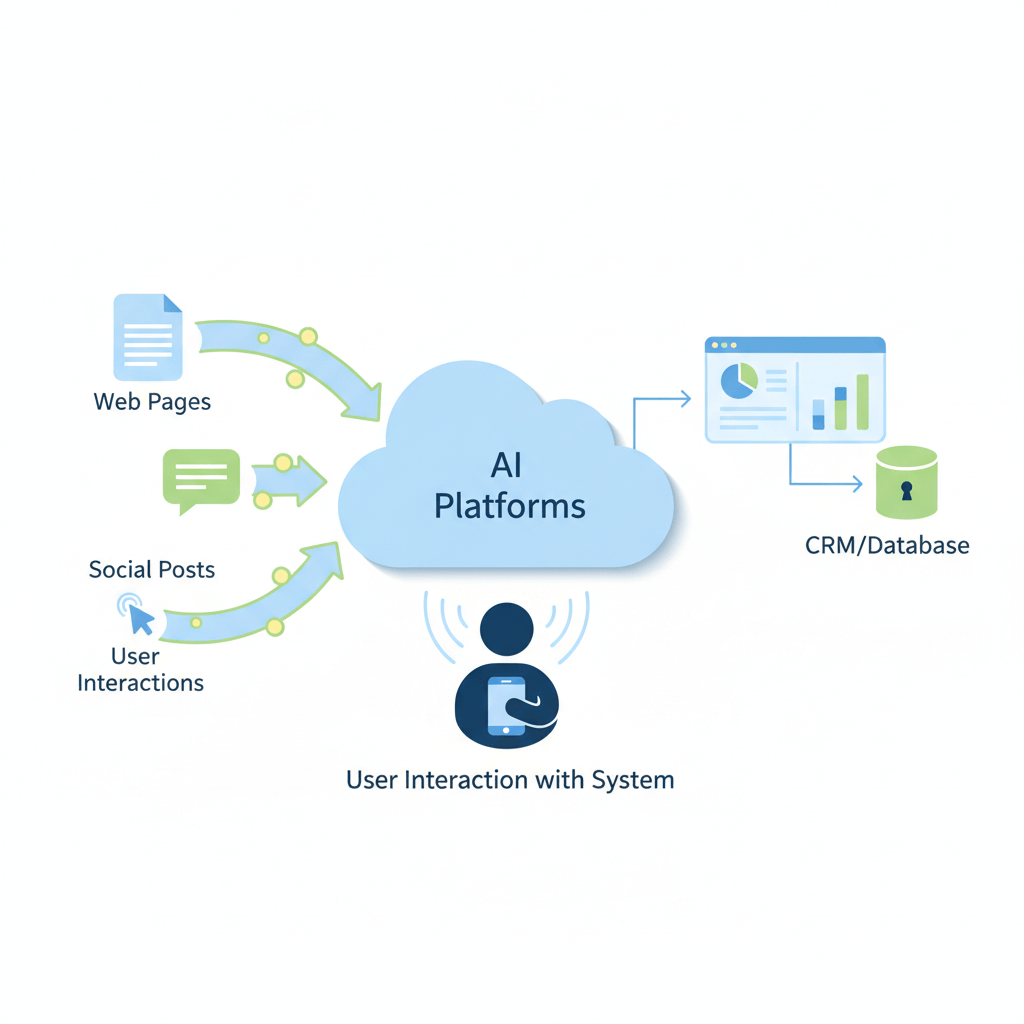
- Push visibility events to CRMs and GA4. As a result, teams close the loop from AI discovery to closed deals.
-
Alerts, exports, and API access
- Get webhooks, CSV exports, and developer APIs for custom workflows.
For strategy guidance on AI search and AEO, see AI Search Strategy Discovery. To compare AEO and GEO approaches, read AEO vs GEO. For analytics tied to social growth, try LinkedIn Marketing Analytics.
Benefits and business impact of AI visibility tools
AI visibility tools speed better decisions and reduce guesswork. Because they centralize prompt level data, teams act on clear signals. As a result, leaders allocate budget with confidence and measure real revenue impact.
Key business benefits
Faster, evidence based decision making
- These tools surface model level trends and prompt performance. Therefore product and content teams prioritize what truly moves the needle.
Higher engagement and conversion lift
- AI referred users often show stronger intent. For example, Ahrefs found AI search visitors converted far better than traditional organic visitors: Ahrefs Article.
Optimized marketing ROI
- Because you can tie AI discovery to CRM events, teams shift spend to high performing channels and prompts. This reduces wasted ad dollars and improves lifetime value.
Stronger digital identity and asset protection
- Visibility tools map citations, EEAT signals, and sentiment. As a result, brands catch misinformation earlier and protect reputation.
Improved lead quality and pipeline attribution
- Push visibility events into CRM and GA4. Then sales teams see higher quality leads and shorter time to close.
Real world example and hypothetical wins
Case example: A software company tracks 75 prompts per product line and notices a single prompt drives 40% of AI referrals. They enrich that content and increase demo signups by 30% within six weeks.
HubSpot use case: Teams using AEO diagnostics report clearer optimization priorities. For guidance see HubSpot’s AEO Grader.
Hypothetical scenario: An ecommerce brand detects rising negative sentiment from an AI source. They respond with updated product descriptions and citations. Consequently returns fall and trust recovers in one month.
Overall impact
AI visibility tools turn noisy model outputs into measurable outcomes. Therefore they help teams boost engagement, prove ROI, and protect digital assets. With the right tracking and CRM integration, organizations capture value faster and scale sustainably.
Comparative table: AI visibility tools at a glance
| Tool | Core features | Pricing | Best use case |
|---|---|---|---|
| Peec.ai | Prompt monitoring; model-level analytics; dashboards; CRM and API integrations | €89–€199/mo | Small to mid companies needing clear dashboards and quick setup |
| Aivisibility.io | Prompt tracking; sentiment analysis; lightweight reports; alerts | $19–$49/mo | Freelancers and startups testing AEO and AI search tactics |
| Otterly.ai | Screenshot capture; prompt explorer; engagement signals; exports | $29–$189/mo | Content teams requiring multimodal tracking and ops support |
| Parse.gl | Enterprise API; large scale prompt sets; custom workflows; SLAs | $159+/mo | Mid-market and enterprise teams with engineering resources |
| HubSpot AEO Grader | AEO diagnostics; presence quality; sentiment and share of voice metrics; CRM alignment | Free tier (paid HubSpot plans available) | Marketing teams using HubSpot for end-to-end attribution |
Choosing the right tool
Start with a small prompt set and a trial. Therefore you see real model behavior fast. However, scale prompts as you learn. As a result, your team refines content and improves ROI.
Conclusion: Make AI visibility tools part of your growth stack
AI visibility tools are now essential for managing modern digital identity. They transform scattered model outputs into clear analytics and engagement tracking. As a result, decision makers measure impact, protect brand assets, and improve marketing ROI.
Find@ stands out as a premium option for creators and businesses. It offers advanced analytics, dynamic QR codes, customizable bio pages, and smart short links. Therefore teams gain granular control over traffic sources and performance tracking.
For creators, Find@ simplifies attribution and boosts audience conversion. For businesses, Find@ integrates with developer APIs so visibility events feed CRMs and help close the loop from discovery to conversion. Learn more about developer integrations at Find@ Developer Integrations.
Start small, track prompt level performance, and iterate. With the right AI visibility tools and platforms like Find@, you protect your digital identity and scale revenue with confidence.
Frequently Asked Questions about AI visibility tools
What are AI visibility tools and why do they matter?
AI visibility tools collect prompt level signals from LLMs and map brand mentions. They show where discovery happens. Therefore teams turn noisy outputs into clear analytics and actions.
How do these tools improve decision making and ROI?
They surface model trends, prompt winners, and engagement signals. As a result product and marketing teams can reallocate spend to high performing prompts and channels.
How hard is implementation for small teams?
Start small and track 50 to 100 prompts per product line. However even a modest setup gives useful weekly patterns. Then integrate with your CRM or GA4 to close the loop.
Can creators and small businesses use Find@ with visibility workflows?
Yes. Find@ offers advanced analytics, dynamic QR codes, customizable bio pages, and smart short links. Therefore creators gain better attribution and control over traffic sources.
What results should teams expect first?
Expect clearer signal to guide content tests in weeks. Also expect improved lead quality and faster pipeline attribution once you push events to CRM.