

Social media ecommerce and healthcare social media strategies are mission-critical for brands and providers. They shape discovery, trust, and conversions. For example, Gen Z and live commerce now drive rapid purchase decisions. Because consumers now expect shoppable content, seamless in‑app checkout, transparent product demos, and strong privacy safeguards, marketers must design connected workflows that link social posts to fast, measurable buying paths across web and physical touchpoints; otherwise campaigns risk reach without reliable ROI.
This guide explains practical tactics, compliance checkpoints, and platform-first ideas that help ecommerce brands and health systems convert attention into action while protecting patient privacy, satisfying FDA and FTC rules, and measuring impact so teams can scale creator programs, leverage short-form and live commerce, and use smart links, dynamic QR codes, and bio pages that convert social interactions into real-world sales, and connect to headless commerce, APIs, and agentic AI discovery tools to drive measurable omnichannel lift.
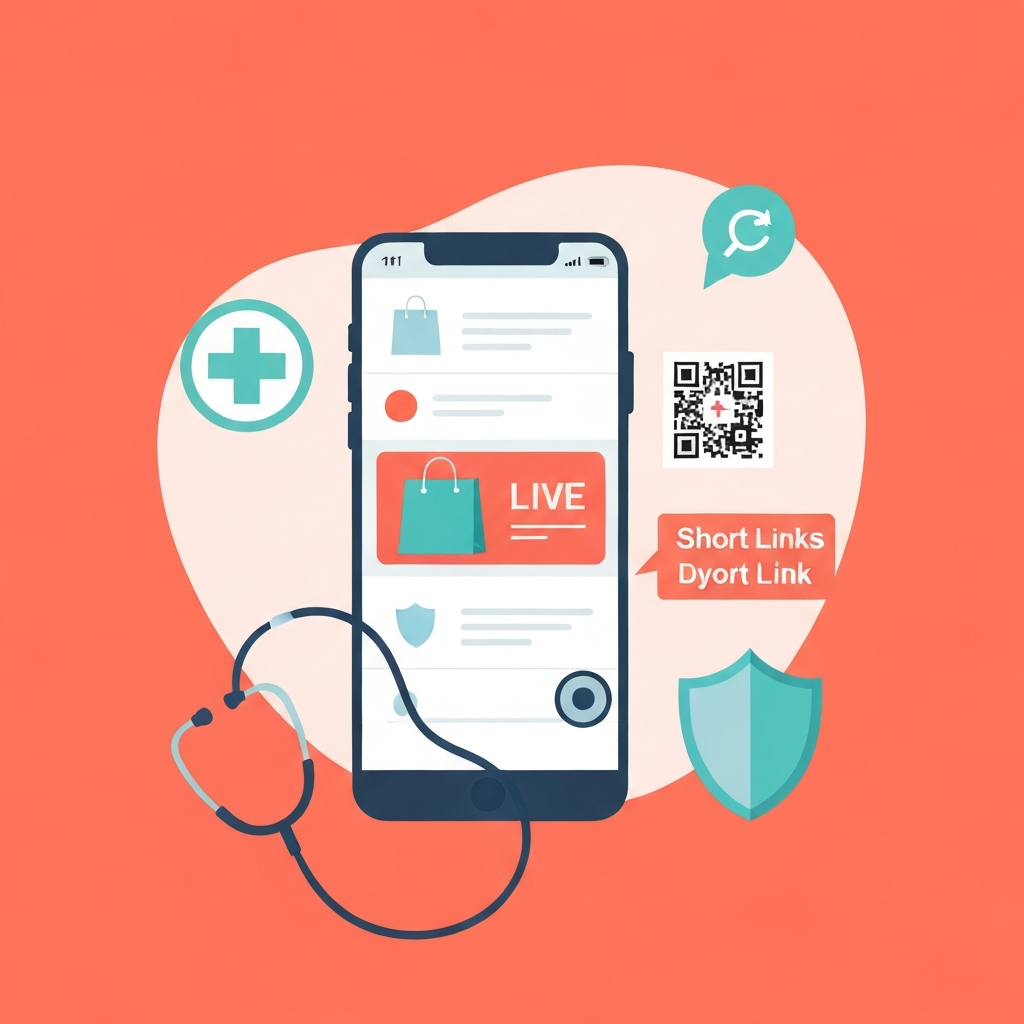
Why social media ecommerce and healthcare social media strategies matter
Social platforms now sit at the center of discovery and care decisions. For example, 44% of Gen Z have bought on social media. Meanwhile, live commerce and short-form video drive fast intent and quick purchases. Because shoppers expect shoppable posts and seamless checkout, brands must remove friction between content and cart. Healthcare providers must also balance engagement with strict privacy rules.
Consumers use social for product research and health information. As a result, content that builds trust wins. For example, human-generated product demos and honest creator reviews improve conversion. However, AI-led discovery and agentic tools also change how people search and buy.
How social media ecommerce and healthcare social media strategies change conversions and trust
Social-first commerce scales discovery into measurable revenue. Global ecommerce will top trillions, and social channels push omnichannel buying. For example, TikTok Shop livestreams show high conversion during live demos. Brands that link short-form content to fast purchase paths gain clear ROI.
Healthcare teams can use the same mechanics, but with guardrails. They need HIPAA-aware workflows, clear consent, and compliant messaging. HHS OCR details enforcement trends and penalties, so teams should follow guidance: HHS HIPAA Compliance. Likewise, marketers should monitor FDA and FTC rules for advertising and claims: FDA Regulations and FTC Regulations.
Practical tactics bridge social to sale and care. Use smart short links to track clicks and personalize landing pages. For offline to online moments, embed dynamic QR codes on packaging and signage. Also create focused bio pages that convert social traffic into action. Try these product tools for immediate impact: Smart Short Links, Dynamic QR Codes and Bio Pages That Convert.
In short, social media ecommerce and healthcare social media strategies combine discovery, technology, and compliance. Therefore teams that master workflows, creator partnerships, and measurement win attention and outcomes.
| Parameter | Healthcare social media strategies | Ecommerce social media strategies |
|---|---|---|
| Audience engagement | Trust-first interactions; prioritize patient questions and clarity. | Interest-first engagement; prioritize discovery and impulse triggers. |
| Content type | Educational posts, FAQs, clinician videos, patient stories. | Short-form demos, product reviews, live commerce streams. |
| Regulatory considerations | Strict HIPAA, consent, clinical accuracy, advertising rules. | Truth-in-advertising, influencer disclosure, platform commerce rules. |
| Conversion goals | Appointment bookings, lead capture, education to action. | Add-to-cart, in-app checkout, promo-driven purchases. |
| Measurement & KPIs | Appointment rate, lead quality, patient satisfaction scores. | Conversion rate, AOV, ROAS, live-stream sales. |
| Creator partnerships | Clinician voices, vetted experts, strict approval workflows. | Influencers, affiliate offers, rapid content testing. |
| Channels & formats | LinkedIn, Facebook, YouTube long-form, community groups. | TikTok, Instagram Reels, Shop-enabled livestreams. |
| Workflow & tech | HIPAA-aware landing pages, secure messaging, consent capture. | Smart short links, dynamic QR codes, headless commerce. |
| Risk & moderation | High — PHI leaks and regulatory penalties possible. | Moderate — reputation risk and FTC issues. |
| Typical resourcing | Clinical review cycles; slower content cadence. | Fast creative cycles; frequent testing and iteration. |
Evidence: data, stats, and case studies that prove the approach works
Social media ecommerce and healthcare social media strategies deliver measurable results. Below are recent facts and real-world examples. Each point connects platform behavior to business or care outcomes.
- Global ecommerce is projected to exceed $6.8 trillion in 2026, showing scale. Therefore social channels matter for reach.
- Morgan Stanley estimates agentic shoppers could drive up to $385 billion in U.S. ecommerce by 2030. This highlights AI-led discovery.
- Bain & Company found 80% of consumers use zero-click results in at least 40% of searches. As a result, brands need in-feed discovery.
- Sprout Social reports 49% of Gen Z use TikTok to find purchases. So short-form content influences buying intent.
- TikTok data shows 76% of consumers who engaged with TikTok Shop bought from a livestream. Live commerce clearly converts at scale.
- Bazaarvoice found 46% prefer short-form video for product discovery; 23% seek demo videos. Therefore video content reduces friction.
- Paula’s Choice increased conversions 53.6% after moving to headless commerce. This proves tech and UX matter for social traffic.
- Global live commerce market hit an estimated $172.86 billion in 2025, reflecting massive opportunity for shoppable streams.
- About 91% of retail consumers now shop across channels. Omnichannel strategies bridge social touchpoints to purchase.
- HHS OCR has settled 152 enforcement cases totaling $144.9 million. HIPAA risk is real for healthcare teams.
- Some healthcare orgs plan a 422% increase in AI for patient service compared to 2023. Thus operational change is underway.
Case highlights
Paula’s Choice used headless architecture to shorten checkout flows. Conversion rose 53.6% after the change. Meanwhile, TikTok Shop livestreams show high immediacy and conversion for product demos. Healthcare teams must focus on secure workflows. HHS OCR enforcement proves fines and settlements happen. Therefore compliance is not optional.
Bottom line: data supports investment in social commerce and compliant health social programs. For example, build measurable links from posts to checkout or booking, and test creator formats regularly.
Conclusion
Social media ecommerce and healthcare social media strategies are no longer optional. They shape discovery, trust, and measurable outcomes. For example, short-form video and live commerce drive fast intent. Meanwhile, healthcare teams must pair those tactics with strict privacy safeguards.
Focus on connected journeys from post to purchase or booking. Use smart short links, dynamic QR codes, and bio pages to measure impact. Because measurement informs optimization, track conversions and creator-driven revenue.
Find@ is purpose-built to power those journeys. It’s a digital identity infrastructure platform. It helps creators and businesses own links, pages, and QR workflows. Visit Find@. Read our guides at the Blog & Knowledge Hub: Blog & Knowledge Hub. Follow us on Instagram: Instagram.
Start small, iterate fast, and always protect patient privacy. Therefore teams can scale social programs with confidence and clear ROI. Get started with secure links and QR workflows to convert social into revenue. Contact Find@ to see a demo.
2) How do social media ecommerce and healthcare social media strategies differ?
They share tactics but differ in risk and intent: ecommerce prioritizes rapid conversion, shoppable content, and frequent testing while healthcare prioritizes accuracy, informed consent, and guarded clinician workflows.
For HIPAA and privacy guidance, see CMS’s HIPAA privacy and security overview: CMS HIPAA Privacy and Security Information.


